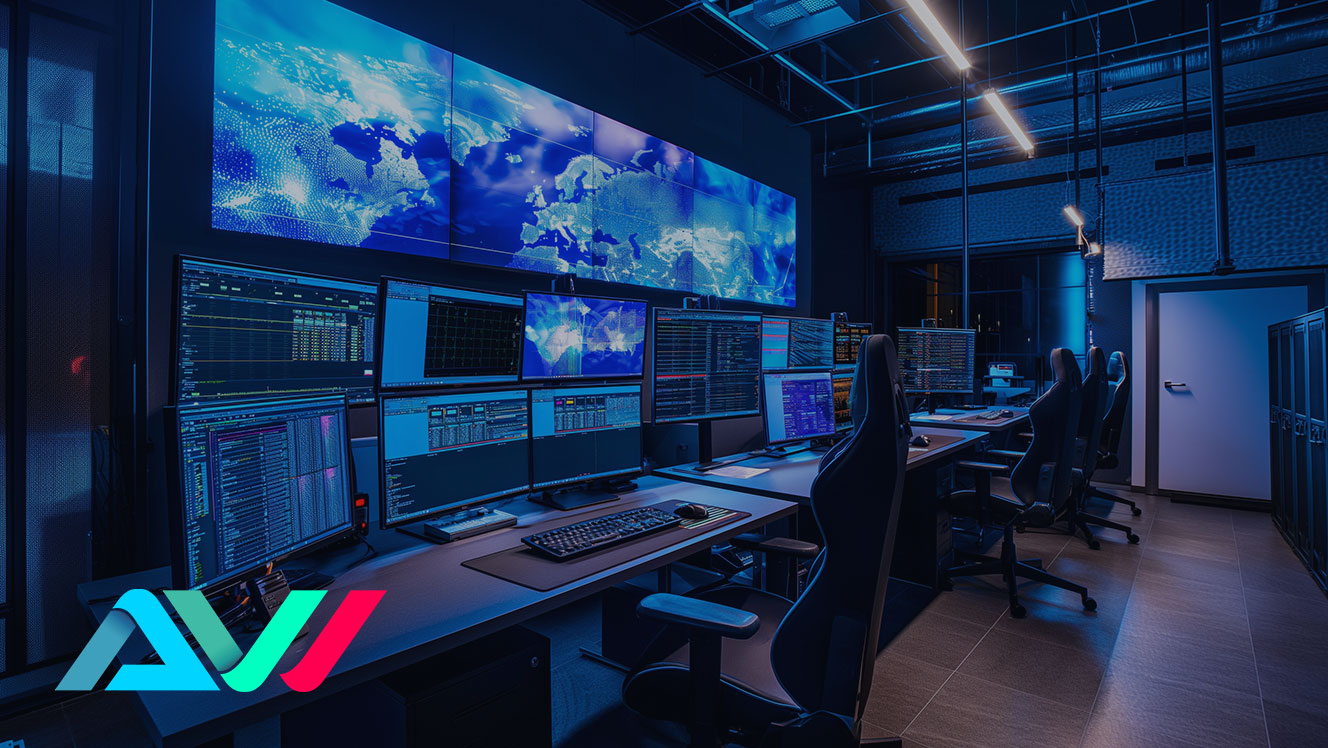
Control room environments operate continuously, requiring display systems that can perform reliably without interruption. A 24/7 control room video wall system is specifically engineered to deliver consistent performance, durability, and real-time visibility in mission-critical operations such as security monitoring, utilities, transportation, and emergency response.
Unlike standard display setups, these systems are built to handle constant use while maintaining image quality, system stability, and operational efficiency.
TL;DR — Quick Summary
- 24/7 control room video wall systems are designed for continuous, uninterrupted operation
- Commercial-grade displays ensure durability and long-term reliability
- Redundancy and failover systems reduce the risk of downtime
- Centralized control allows for real-time content management across multiple screens
- These systems are essential for mission-critical environments where visibility and uptime are non-negotiable
What Defines a 24/7 Control Room Video Wall System?
A 24/7 control room video wall system is built using commercial-grade components designed for continuous operation. These systems differ from standard displays in their ability to maintain performance under constant use, often running around the clock without degradation in brightness, color accuracy, or responsiveness.
At the core of these systems are integrated processors and controllers that manage content across multiple displays. This allows operators to view real-time data, video feeds, and analytics within a unified visual environment. For a foundational understanding of how these systems work, see our guide on what is a control room video wall.
Commercial-Grade Displays for Continuous Operation
One of the most critical components of a 24/7 system is the display hardware itself. Commercial-grade displays are specifically designed to operate continuously without overheating or experiencing premature wear. This distinction matters significantly in practice — consumer-grade screens are typically rated for four to eight hours of daily use, while commercial panels are engineered for 24-hour operation across years of continuous service.
These displays maintain consistent brightness and color accuracy over extended periods, which is essential in environments where operators rely on visual data to make time-sensitive decisions. Degraded brightness or color shift — common in non-commercial panels after prolonged use — can compromise the accuracy of what operators see on screen.
Commercial displays also incorporate enhanced cooling systems and heat-dissipation designs that prevent overheating during extended operating cycles, extending the hardware’s overall lifespan and reducing the likelihood of unplanned failures.
Redundancy and Failover Capabilities
Reliability is a defining characteristic of any mission-critical system, and 24/7 video wall systems are engineered with multiple layers of redundancy to ensure continuous operation even when individual components fail. This isn’t a luxury feature — in high-stakes environments, a display going dark at the wrong moment can directly impact safety and response outcomes.
Redundancy in these systems typically spans several layers. Backup power supplies keep displays operational during electrical disruptions. Redundant signal paths ensure that a single cable or connection failure doesn’t interrupt the feed.
Failover processors stand ready to take over immediately if a primary processing unit encounters an issue, and network redundancy prevents connectivity problems from isolating the system from its data sources. The result is a platform designed so that no single point of failure can bring the entire display environment down — a standard that standard AV equipment simply isn’t built to meet.
Many long-term system failures can be traced back to avoidable video wall deployment mistakes made during early planning and infrastructure design.
Centralized Control and Real-Time Content Management
Modern video wall systems rely on centralized control platforms that enable operators to manage content across all displays from a single interface. This is more than a convenience feature — it’s what transforms a collection of individual screens into a cohesive operational tool.
With advanced AV wall programming, operators can switch between data sources in real time, responding immediately to changing conditions without navigating multiple systems. Display layouts can be dynamically reconfigured, allowing teams to adapt the visual environment based on the nature of an incident or the phase of an operation.
During high-priority events, critical information can be pushed to the forefront across all screens simultaneously, ensuring that every operator in the room has immediate visibility into what matters most. Content synchronization across displays also eliminates the confusion that can arise when different screens show conflicting or out-of-sync information.
This level of centralized control is particularly valuable in environments where incidents evolve rapidly and every second of clarity has operational consequences.
Optimized for Situational Awareness
The primary goal of any control room video wall is to enhance situational awareness. By consolidating multiple data sources — live camera feeds, sensor data, GIS maps, network status, and communication logs — into a single unified visual platform, operators can interpret complex, fast-moving situations more quickly and make better-informed decisions under pressure.
In environments such as emergency operations centers or security control rooms, this capability directly impacts response times and outcomes. Rather than toggling between individual monitors or software windows, operators work within a shared visual environment where the full picture is always in front of them. When all relevant information is visible simultaneously and organized logically, teams can coordinate faster and with fewer errors.
For a deeper look at how these systems improve performance in real-world scenarios, see how video walls improve response times in crisis environments.
Scalability and Future-Proof Design
24/7 video wall systems are designed with long-term operational needs in mind. As organizations grow and their monitoring requirements evolve, these systems can be expanded to accommodate additional displays, integrate new data sources, or adapt to updated technologies — without requiring a complete infrastructure overhaul.
This scalability is a meaningful advantage for organizations managing multi-year capital planning. A system installed today can be extended as operational demands increase, new monitoring tools are added, or display configurations are restructured. Rather than treating the video wall as a fixed installation, modern systems are architected to evolve alongside the organization. For long-term operations planning and infrastructure investments, this flexibility makes AV wall systems a more sustainable and cost-effective choice than systems that would require a full replacement to accommodate growth.
Designed for Mission-Critical Environments
Control room video walls are deployed in environments where consistent performance isn’t optional — it’s foundational to the operation itself. Security operations centers depend on uninterrupted visibility across camera networks and access control systems. Utilities and infrastructure monitoring facilities use video walls to track grid performance, pipeline status, and environmental sensors across wide geographic areas. Transportation and traffic management centers rely on real-time feeds to coordinate responses to incidents, congestion, and system disruptions. Emergency response and crisis management operations require a display platform that remains stable precisely when conditions are most chaotic.
In each of these environments, even brief system disruptions carry real consequences — whether that means a delayed response, a missed alert, or a gap in situational awareness during a critical window. That’s why 24/7 video wall systems are engineered to a standard that prioritizes uptime, resilience, and consistent performance above all else.
Frequently Asked Questions
What makes a video wall suitable for 24/7 operation?
A video wall designed for continuous operation uses commercial-grade displays, advanced cooling systems, and reliable processing hardware to maintain uninterrupted performance. These components are rated for around-the-clock use and selected specifically for their durability under sustained operational conditions.
What is the difference between standard displays and 24/7 video wall systems?
Standard displays are designed for limited daily use and are not built to sustain continuous operation without performance degradation. 24/7 video wall systems use commercial-grade hardware engineered for durability, consistent uptime, and long-term reliability in mission-critical environments.
Do control room video wall systems include redundancy?
Yes. Most 24/7 systems incorporate multiple redundancy features — including backup power supplies, failover processors, redundant signal paths, and network redundancy — to ensure that a single component failure does not interrupt the display environment.
How long do 24/7 control room video wall systems last?
With proper maintenance, commercial-grade systems can operate reliably for many years under continuous use. The longevity of any system depends on the quality of its components, the conditions of its environment, and the consistency with which it receives preventive maintenance.
Final Thoughts
24/7 control room video wall systems are not simply large displays — they are engineered platforms designed to support continuous monitoring, real-time decision-making, and operational resilience across some of the most demanding environments in any industry. By combining durable commercial-grade hardware, centralized control, built-in redundancy, and scalable architecture, these systems provide the reliability and performance that mission-critical operations depend on.
Organizations that invest in properly designed video wall systems position themselves to maintain clear visibility, reduce the risk of costly downtime, and respond effectively to whatever challenges arise — around the clock, without compromise.
Planning a Control Room Video Wall?
Speak with our team about designing and integrating a video wall solution tailored to your operational requirements.