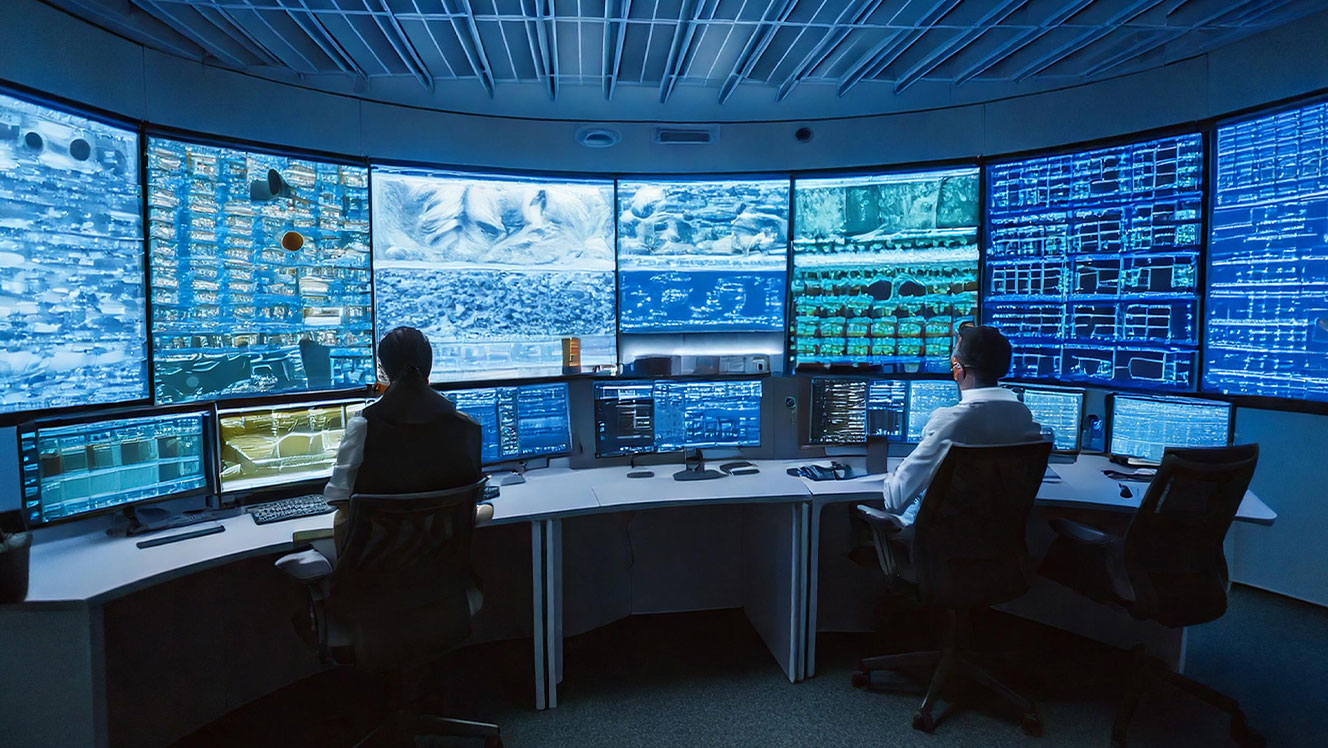
A control room video wall is a large-format, multi-display system designed to centralize real-time data in mission-critical environments such as crisis rooms, emergency operations centers, and security command hubs. By consolidating surveillance feeds, analytics dashboards, alerts, and communication platforms into a unified visual surface, these systems improve situational awareness and significantly reduce response times during high-pressure events.
Unlike fragmented monitor arrays or commercial displays, professionally engineered video walls are built for 24/7 operation, scalable integration, and synchronized multi-source management — making them a critical component of modern emergency response infrastructure.
TL;DR — Why Video Walls Matter in Crisis Environments
Control room video walls improve response times by centralizing live data, enhancing situational awareness, reducing communication bottlenecks, and supporting real-time decision-making. Unlike fragmented multi-monitor setups, integrated AV wall systems provide structured, scalable, 24/7-ready display environments engineered for high-pressure operations.
What Is a Crisis Room Video Wall?
A crisis room video wall is a large-format, multi-display system designed to aggregate real-time information from surveillance feeds, communication platforms, analytics dashboards, and operational monitoring tools.
Integrated as part of broader AV wall systems, these deployments allow emergency response teams to monitor evolving situations from a centralized visual command platform.
Unlike consumer display arrays, control room video walls are built for continuous operation, system redundancy, and synchronized content management.
Enhancing Situational Awareness in Real Time
One of the most critical benefits of deploying control room video walls in crisis environments is improved situational awareness.
Crisis management teams must process large volumes of rapidly changing information, including:
- Live CCTV feeds
- Emergency alerts
- GIS mapping
- Weather systems
- Social media monitoring
- Infrastructure analytics
By consolidating these data streams into a unified display environment, teams gain a panoramic view of operational conditions. This centralized visibility allows faster identification of threats, bottlenecks, and emerging risks.
For example, during a natural disaster response, a video wall may display live drone feeds, satellite imagery, evacuation routes, and weather projections simultaneously — allowing decision-makers to deploy resources more effectively.
Eliminating Communication Bottlenecks
In high-stakes environments, fragmented communication slows response times. Crisis rooms often involve multiple teams — security, logistics, medical, infrastructure, public information — all operating simultaneously.
A video wall acts as a central communication hub by integrating:
- Video conferencing platforms
- Shared dashboards
- Incident reporting systems
- Live status boards
Instead of switching between individual monitors or isolated systems, teams operate from a shared visual platform. This reduces delays caused by system switching, miscommunication, or incomplete visibility.
Real-Time Data Integration & Instant Response
Crisis situations evolve minute by minute. Effective response depends on the ability to react instantly to new information.
Control room video walls are engineered to handle:
- Live signal routing
- Automated alert triggers
- Multi-source display layouts
- Rapid source expansion across full-screen views
When a new alert or live feed becomes critical, it can be expanded instantly across the entire wall — ensuring immediate team focus.
This dynamic content management significantly improves operational agility.
Supporting Multi-Team Collaboration
Crisis rooms rarely operate in isolation. Multiple stakeholders must collaborate in real time.
A unified video wall:
- Creates a shared visual reference point
- Reduces redundant reporting
- Aligns teams on the same operational data
- Supports interactive planning and annotation
Advanced systems may allow teams to highlight zones of concern or reorganize layouts dynamically during active incidents.
By providing a structured collaboration environment, video walls reduce misalignment and accelerate coordinated response.
Reducing Cognitive Load & Decision Fatigue
Crisis management environments generate high cognitive stress. Decision fatigue becomes a serious operational risk when teams must constantly shift attention between fragmented information sources.
A centralized video wall environment reduces cognitive strain by:
- Organizing information spatially
- Grouping related data streams
- Minimizing system switching
- Presenting high-resolution, readable dashboards
This allows operators to focus on analysis and response rather than navigation.
Built for 24/7 Mission-Critical Operation
Crisis rooms often operate continuously. Unlike commercial displays, professional control room video walls are engineered for:
- Continuous-duty performance
- Thermal management
- Redundant power options
- Long-term calibration stability
These systems are designed to remain reliable during prolonged incidents or sustained emergency operations.
Scalability for Evolving Crisis Management Needs
Crisis environments evolve over time. As monitoring systems expand, display environments must scale accordingly.
Modern AV wall deployments support:
- Modular expansion
- Additional input sources
- Integration with new analytics tools
- Reconfigurable layouts
This scalability ensures long-term adaptability without requiring complete system replacement.
When Should Organizations Upgrade Their Crisis Room Displays?
Crisis environments evolve over time. As operational demands increase, legacy display setups often become a bottleneck rather than a support system. Upgrading to a professionally engineered control room video wall is typically driven by operational friction rather than aesthetic preference.
Below are common indicators that a crisis room display environment may require modernization.
Fragmented Multi-Monitor Setups
Many organizations begin with individual monitors mounted side-by-side to increase screen real estate. While functional at first, this approach quickly creates fragmentation.
Operators may need to turn their heads constantly, toggle between screens, or manually resize windows to compare information across sources. During high-pressure situations, even small delays caused by screen switching or visual fragmentation can slow reaction time.
A structured video wall consolidates those displays into a unified visual environment, eliminating physical separation and improving simultaneous data visibility.
Increasing Data Volume and Source Complexity
Modern crisis rooms process significantly more data than they did even five years ago. Surveillance feeds, analytics dashboards, GIS overlays, social monitoring, environmental systems, and communication tools all generate continuous inputs.
When display systems are not designed to handle multi-source expansion, operators may struggle to prioritize information effectively. A scalable video wall allows dynamic layout control — expanding critical alerts to full-screen or reorganizing feeds in real time without disrupting workflow.
Slower Operational Response Times
If response times are increasing despite improved software systems, the bottleneck may be visual infrastructure.
Delayed identification of threats, missed alerts, or confusion between departments can often be traced back to poor visibility. A centralized video wall environment ensures that emerging events are displayed prominently and shared instantly across the entire response team.
Improved visual clarity often translates directly into faster, more confident decision-making.
Limited Cross-Team Coordination
Crisis management rarely involves a single department. Security, logistics, communications, and operations teams must often collaborate simultaneously.
When display systems are isolated or poorly positioned, teams rely on verbal relays or manual updates rather than shared visual context. A unified control room video wall creates a common operational picture, reducing miscommunication and aligning teams around the same live data.
Displays Not Rated for Continuous 24/7 Operation
Many organizations initially deploy commercial-grade screens not engineered for sustained uptime. Over time, this can lead to:
- Brightness degradation
- Image retention
- Panel drift
- Overheating
- Increased maintenance downtime
Professional-grade video wall systems are designed specifically for continuous-duty environments. If existing displays require frequent maintenance or show performance decline during extended incidents, upgrading becomes a reliability issue rather than a cosmetic one.
Preparing for Future Growth
Some organizations upgrade proactively rather than reactively. As infrastructure expands, facilities grow, or operational scope increases, display environments must scale accordingly.
A modular AV wall system allows for future panel expansion, signal upgrades, and integration with new technologies without requiring a full redesign. Investing in scalable architecture early can prevent costly retrofits later.
Frequently Asked Questions About Crisis Room Video Walls
Are crisis room video walls different from standard control room video walls?
Crisis room video walls are typically engineered to prioritize rapid data aggregation and multi-agency collaboration. While the underlying technology is similar to other control room video walls, crisis environments often require enhanced redundancy, real-time signal switching, and optimized communication integration.
What is the difference between a monitor wall and a video wall in emergency operations?
A professionally designed control room monitor wall may consist of multiple displays mounted together to provide expanded visibility across operational dashboards and live feeds. A well-engineered video wall includes integrated signal processing, unified content management, and continuous-duty components designed for mission-critical performance. In emergency environments, this distinction can significantly impact reliability and response time.
How quickly can a crisis room video wall display new alerts?
Professional video wall systems can instantly expand new alerts or live feeds across the entire display surface. This allows teams to focus attention immediately on emerging incidents without delay.
Are crisis room video walls designed for 24/7 operation?
Yes. Mission-critical deployments are built for continuous operation, incorporating thermal management, failover systems, and long-term calibration stability to ensure reliable performance during extended emergency situations.
Final Thoughts
Control room video walls are not simply large displays — they are structured visual command systems engineered for speed, clarity, and operational resilience. In crisis environments where seconds matter, centralized visibility, synchronized communication, and real-time data aggregation directly influence response effectiveness. Organizations that invest in professionally integrated AV wall systems position their teams to act decisively under pressure while maintaining long-term scalability and reliability.
Planning a Control Room Video Wall?
Speak with our team about designing and integrating a video wall solution tailored to your operational requirements.