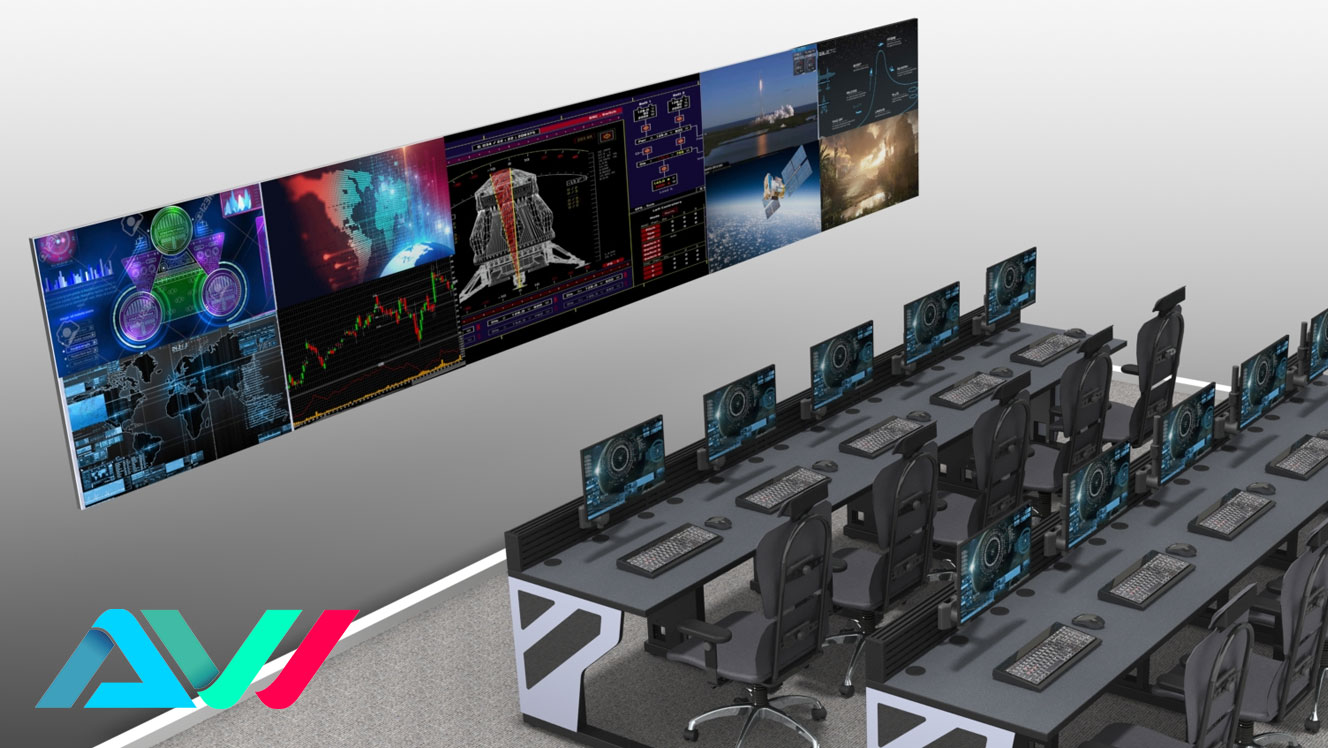
- Published on
- By Justin Tocco
TL;DR — What Is a Control Room Video Wall?
A control room video wall is a large-format, multi-display system designed for continuous 24/7 monitoring in mission-critical environments. Unlike standard monitor walls or commercial displays, these systems integrate high-resolution panels, mounting infrastructure, signal processing, and custom programming to deliver synchronized real-time data visualization. They are engineered for uptime, scalability, and operational decision-making across industries such as security, utilities, transportation, and healthcare.
Introduction
In mission-critical environments, visibility is not optional — it is foundational. A control room video wall serves as the central visual platform for monitoring live data, surveillance feeds, system diagnostics, and operational dashboards in real time.
Unlike standard commercial displays, control room video walls are engineered for continuous 24/7 operation, synchronized multi-source integration, and high-stakes decision-making environments. Whether deployed in security operations centers, utilities monitoring facilities, transportation hubs, or enterprise command centers, these display environments are designed to deliver clarity, reliability, and scalability.
This guide explains what a control room video wall is, how it works, the key components involved, and what makes it suitable for around-the-clock operations.
What Is a Control Room Video Wall?
A control room video wall is a large-format display system composed of multiple panels configured to operate as a unified visual surface. These systems allow operators to monitor multiple information streams simultaneously, including:
- Surveillance camera feeds
- SCADA or operational dashboards
- Weather and environmental data
- Network monitoring platforms
- Analytics and reporting tools
- Live communication feeds
Unlike digital signage used for advertising or public messaging, control room video walls are built for operational continuity. They prioritize uptime, redundancy, precision calibration, and seamless integration with command and control software.
Modern deployments are typically integrated as part of broader AV wall systems that combine display hardware, mounting structures, signal routing, programming, and operator workstation alignment.
Core Components of a Control Room Video Wall
A professional control room video wall consists of more than just screens. It is a structured system composed of multiple integrated components.
Display Panels
Display panels form the visible surface of the video wall. Common technologies include:
- LCD panels with ultra-thin bezels
- Direct-view LED modules
- Projection cube systems
Each option varies in resolution, brightness, viewing angle, and longevity. For 24/7 control room environments, panels must be rated for continuous operation without degradation.
Mounting & Structural Framework
Video wall mounting systems ensure panel alignment, stability, and long-term durability. Precision mounting is critical for:
- Panel leveling
- Seam alignment
- Thermal expansion control
- Service accessibility
Professional mounting frameworks allow for panel maintenance without disrupting the entire wall.
Video Wall Controllers & Signal Processing
Behind the display surface, video wall controllers manage:
- Source routing
- Layout configuration
- Scaling and resolution
- Real-time content switching
This infrastructure allows operators to display multiple sources simultaneously or expand a single source across the entire wall.
Control Room Programming
Proper av wall programming ensures the wall functions as an operational tool rather than just a display. Layout presets, alert automation, and zone configuration are customized to the workflow of the facility.
Operator Console Integration
The positioning of operator consoles relative to the video wall is essential for ergonomics and visibility. Sightlines, viewing distance, and workstation layout directly impact operator performance.
Control room furniture must align with the display environment to create a cohesive workspace.
What Makes a Video Wall “24/7 Ready”?
Not all video walls are designed for continuous operation. Control room video walls must meet specific requirements to support uninterrupted monitoring.
Continuous Duty Rating
Professional-grade panels are engineered to operate 24 hours per day without overheating or brightness decay.
Thermal Management
High-demand environments require proper ventilation, cooling systems, and airflow design to prevent performance degradation.
Redundancy & Failover Systems
Mission-critical deployments often include backup signal paths, redundant power supplies, and remote monitoring capabilities to prevent downtime.
Long-Term Calibration Stability
Over time, panel brightness and color can drift. Professional video wall systems are designed for minimal drift and easier recalibration.
Control Room Video Walls vs. Monitor Walls
The terms “video wall” and “monitor wall” are often used interchangeably, but there are distinctions.
A control room monitor wall may refer more generally to an arrangement of displays mounted together. However, a true control room video wall typically includes:
- Integrated signal processing
- Unified layout control
- Structured mounting systems
- Professional calibration
- Continuous-duty display components
Monitor walls may be simpler configurations, while video walls represent engineered, system-level deployments.
Design Considerations for Control Room Video Walls
Effective video wall design requires more than selecting panel size.
Key planning considerations include:
- Viewing distance and resolution requirements
- Ambient lighting conditions
- Operator sightline angles
- Ceiling height and wall structure
- Signal infrastructure and network capacity
- Future expansion capability
Proper consultation and planning ensure that the wall supports workflow rather than creating operational strain.
Industries That Rely on Control Room Video Walls
Control room video walls are widely deployed across mission-critical sectors, including:
- Security & surveillance operations
- Energy and utility monitoring
- Transportation and aviation command centers
- Healthcare command hubs
- Military and law enforcement operations
- Enterprise network operations centers
Each industry requires tailored configuration, but the foundational goal remains the same: centralized visibility and coordinated response.
When Should an Organization Upgrade to a Video Wall?
Organizations typically consider upgrading when:
- Monitoring systems outgrow single-display setups
- Operational response times are delayed
- Teams struggle with fragmented information sources
- Visibility across departments becomes siloed
- Existing displays cannot support 24/7 operation
Upgrading to a structured control room video wall improves shared visibility and operational alignment.
Final Thoughts
A control room video wall is not simply a large display — it is a structured visual command platform engineered for continuous performance. From hardware selection and mounting precision to signal routing and ergonomic integration, each component plays a role in ensuring reliable, mission-critical operation.
When designed and deployed correctly, a video wall becomes the central nervous system of a control room, supporting faster decisions, improved collaboration, and long-term operational resilience.
Frequently Asked Questions About Control Room Video Walls
How long does a control room video wall last?
Professional-grade video wall systems designed for 24/7 operation can last many years when properly maintained. Lifespan depends on panel technology, usage intensity, and environmental conditions.
What is the difference between a video wall and a monitor wall?
A monitor wall typically refers to multiple displays mounted together, while a true control room video wall includes integrated signal processing, unified layout control, and continuous-duty components engineered for mission-critical use.
Are control room video walls designed for 24/7 use?
Yes. Unlike consumer displays, control room video walls are built for continuous operation, incorporating thermal management, redundancy options, and professional calibration systems.
Can video walls be expanded later?
Most AV wall systems are designed with scalability in mind, allowing additional panels, inputs, or processing upgrades as operational needs evolve.
Planning a Control Room Video Wall?
Speak with our team about designing and integrating a video wall solution tailored to your operational requirements.