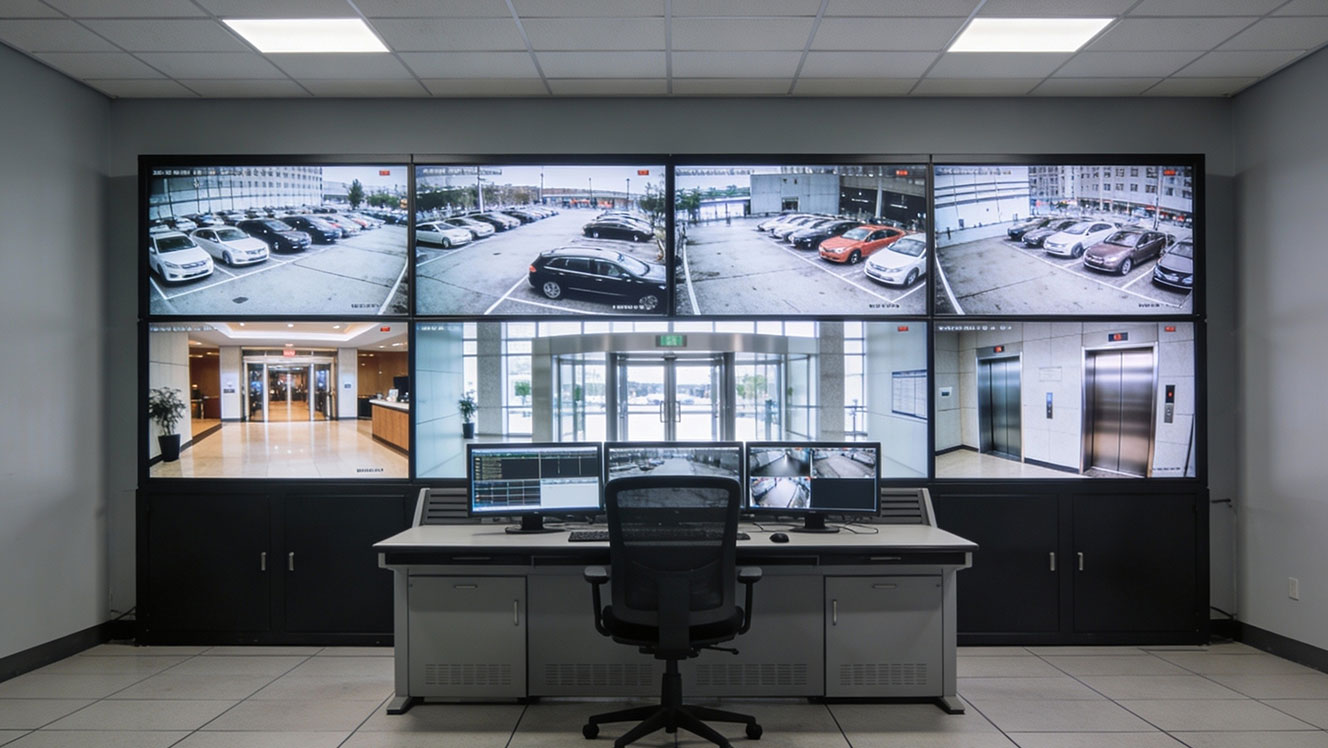
When designing a control room or monitoring environment, one of the most important decisions is whether to choose a video wall or a monitor wall. While both solutions use multiple displays to present real-time data, they differ significantly in terms of integration, performance, scalability, and use case.
Understanding these differences is essential for selecting the right system for your operational needs.
TL;DR — Quick Summary
- Video walls use integrated processors to display content across multiple screens as a single visual canvas
- Monitor walls consist of independent displays showing separate data sources
- Video walls offer seamless content and centralized control
- Monitor walls provide flexibility and lower upfront cost
- The right choice depends on your operational complexity, budget, and scalability needs
What Is a Video Wall?
A video wall is a fully integrated display system that uses multiple screens controlled by a centralized processor to function as a single visual surface. These systems are designed for seamless content distribution, allowing operators to view large-scale data, maps, and dashboards without interruption across multiple displays. If you’re new to the concept, you can start with our guide on what a control room video wall is to understand how these systems function in real-world environments.
In mission-critical environments, control room video walls are often used to consolidate information from various sources into one unified interface. This enables operators to maintain situational awareness and respond quickly to evolving conditions. With advanced synchronization and content management capabilities, video walls are ideal for large-scale operations that require precision and coordination.
What Is a Monitor Wall?
A monitor wall is a configuration of multiple displays that operate independently or with basic switching systems. Each screen typically displays a different data source, such as surveillance feeds, dashboards, or communication tools. If you’re looking for more info, read our detailed control room monitor wall guide.
Unlike integrated systems, monitor walls do not rely on centralized processing to create a seamless visual experience. Instead, they prioritize flexibility and modularity. This makes them a practical solution for organizations that need scalable control room monitor walls without the complexity or cost of full video wall systems.
Key Differences Between Video Walls and Monitor Walls
Integration & Control
Video walls use centralized controllers to manage content across all displays, enabling synchronized layouts and seamless transitions. Monitor walls, on the other hand, rely on independent inputs or basic switching systems, which limit centralized control.
Visual Continuity
Video walls are designed to display content across multiple screens as a single image, minimizing visual interruptions. Monitor walls include bezels between displays, which can break continuity but are often acceptable when monitoring multiple independent data streams.
Scalability
Both systems can scale, but video walls are typically better suited for large, complex environments that require unified visualization. Monitor walls offer modular scalability, allowing organizations to add displays incrementally as needed.
Cost & Complexity
Monitor walls are generally more cost-effective and easier to deploy, making them suitable for smaller or evolving control room environments. Video walls require more advanced hardware and integration, resulting in higher upfront costs but greater long-term capabilities.
Use Case Suitability
Video walls are ideal for environments that require centralized data visualization, such as emergency operations centers or large command centers. Monitor walls are better suited for environments where operators need to monitor multiple independent data sources simultaneously.
When to Choose a Video Wall
Video walls are the preferred choice when:
- Seamless, large-scale visualization is required
- Multiple data sources need to be integrated into a unified interface
- Real-time coordination across teams is critical
- Long-term scalability and centralized control are priorities
Organizations investing in AV wall systems often require the advanced capabilities that video walls provide, especially in high-performance environments.
When to Choose a Monitor Wall
Monitor walls are a strong choice when:
- Budget constraints limit advanced system deployment
- Flexibility and modular expansion are important
- Independent data streams need to be monitored simultaneously
- Seamless content display is not required
For many organizations, monitor walls provide an effective starting point that can evolve into more advanced systems over time.
Frequently Asked Questions
Can a monitor wall function like a video wall?
Not entirely. While monitor walls can display multiple data sources, they lack the centralized processing needed for seamless content distribution across screens.
Which is better for control rooms?
It depends on the use case. Video walls are better for centralized visualization, while monitor walls are better for flexible, multi-source monitoring.
Are video walls more expensive than monitor walls?
Yes, video walls typically require more advanced hardware and integration, resulting in higher upfront costs.
Can you upgrade from a monitor wall to a video wall?
Yes, many organizations start with monitor walls and transition to video wall systems as their operational needs grow.
Final Thoughts
Choosing between a video wall and a monitor wall depends on your operational requirements, budget, and long-term goals. While monitor walls offer flexibility and simplicity, video walls provide the advanced integration and seamless visualization needed for high-performance environments.
By understanding the strengths of each approach, organizations can implement the right solution to improve visibility, enhance decision-making, and support efficient operations.
Planning a Control Room Video Wall?
Speak with our team about designing and integrating a video wall solution tailored to your operational requirements.