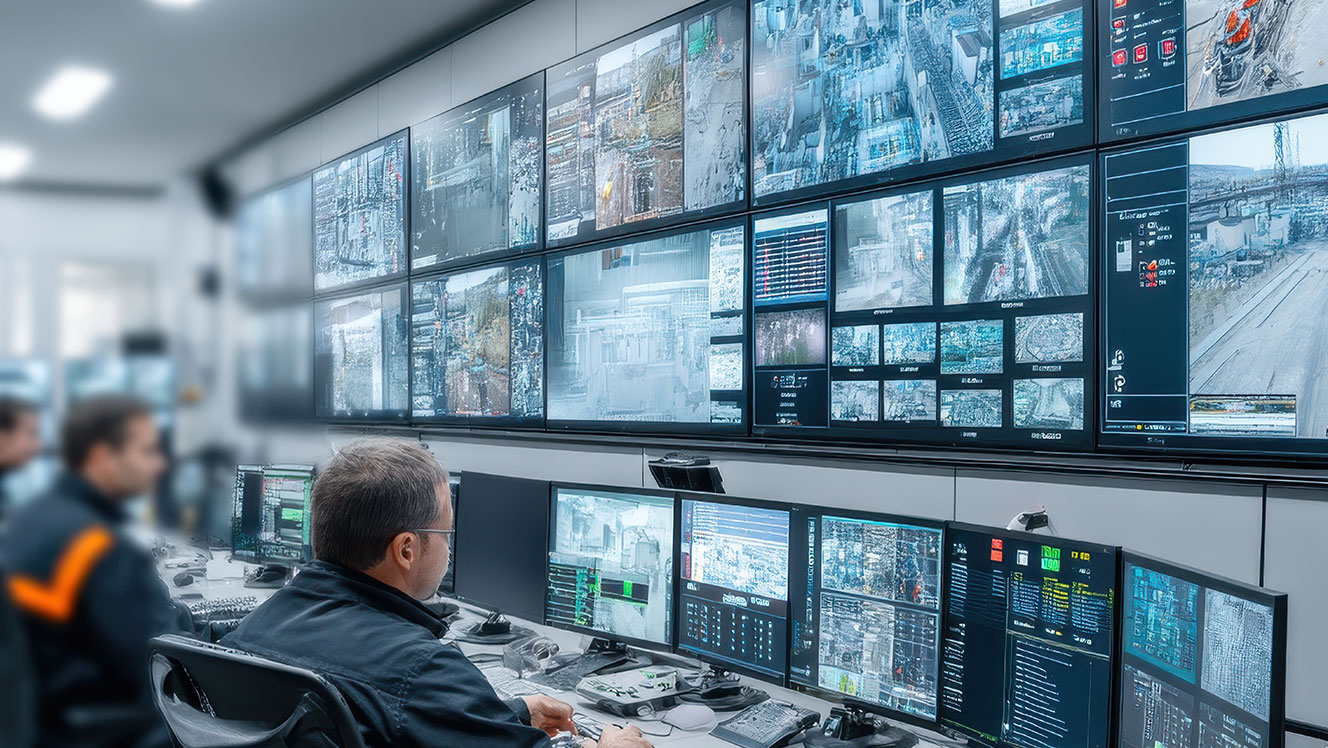
A control room monitor wall is a multi-display configuration that centralizes real-time data across multiple screens in mission-critical environments such as security operations centers, utilities, and transportation hubs. By distributing content across multiple displays, monitor walls provide operators with continuous visibility into key systems, enabling faster analysis and more informed decision-making without the complexity of fully integrated video wall systems.
TL;DR — Quick Summary
- Control room monitor walls use multiple displays to present real-time data across a shared visual workspace
- They offer flexible configurations and are often more cost-effective than fully integrated video wall systems
- Proper layout, viewing distance, and signal management are critical for performance
- Monitor walls are ideal for environments that require scalable, modular display solutions
- For seamless visualization and centralized control, control room video walls may be a better fit
What Is a Control Room Monitor Wall?
A control room monitor wall is a configuration of multiple displays arranged to present data from different sources simultaneously within a centralized workspace. Unlike fully integrated systems, monitor walls typically rely on independent displays connected to various inputs, enabling operators to monitor live feeds, dashboards, alerts, and communication channels simultaneously.
These systems are commonly used in environments where flexibility and scalability are more important than seamless visual continuity. While they may not offer the same level of synchronization as control room video walls, monitor walls provide a practical and effective solution for organizations that need reliable, multi-source visibility without the need for complex infrastructure.
Monitor Walls vs Video Walls: Key Differences
Although the terms are often used interchangeably, monitor walls and video walls serve different purposes and are built using different technologies.
Monitor walls consist of individual displays connected to separate inputs or basic switching systems. They are typically easier to deploy and more cost-effective, making them suitable for smaller control rooms or environments with evolving requirements.
In contrast, control room video wall systems use integrated processors and controllers to manage content across multiple displays as a single visual canvas. These systems are designed for seamless content distribution, synchronized data visualization, and large-scale operations.
Organizations evaluating display solutions should consider factors such as system complexity, budget, scalability, and operational requirements. In many cases, AV wall systems provide the advanced control and integration needed for high-performance environments, while monitor walls offer a simpler, modular alternative.
Key Design Considerations for Monitor Walls
Designing an effective monitor wall requires careful planning to ensure visibility, usability, and long-term performance.
Display Layout & Configuration
While monitor wall configurations can support many operational needs, environments requiring continuous uptime often rely on 24/7 control room video wall systems designed for redundancy and long-term performance.
The arrangement of displays plays a critical role in how effectively operators can interpret information. Common configurations include grid layouts such as 2×2 or 3×3, but the optimal setup depends on the control room’s size and the type of data being displayed. Displays should be positioned to minimize excessive head movement while maintaining clear visibility of all critical information.
Viewing Distance & Sightlines
Proper viewing distance is essential for readability and operator comfort. Screens that are too close can cause eye strain, while those positioned too far away may reduce visibility of detailed data. Designing for optimal sightlines ensures that operators can quickly interpret information without unnecessary physical strain.
Resolution & Screen Size
Selecting the right combination of screen size and resolution ensures that content remains clear and legible. High-resolution displays are especially important when monitoring detailed dashboards, maps, or analytics. The goal is to maintain clarity without overcrowding the visual field.
Bezel Size & Alignment
Since monitor walls use individual displays, bezels (the borders between screens) can interrupt visual continuity. Choosing displays with minimal bezel width and ensuring proper alignment helps create a more cohesive viewing experience.
Signal Management & Content Distribution
Effective signal management is essential for ensuring that content is delivered accurately and efficiently across all displays. Monitor walls typically rely on a combination of input sources such as CCTV feeds, operational dashboards, alert systems, and communication tools.
Depending on the complexity of the setup, content may be managed manually or through centralized systems that allow operators to switch inputs and adjust layouts dynamically. More advanced environments may incorporate software-driven control systems similar to AV wall programming, enabling better coordination and real-time control of displayed content.
Latency, synchronization, and system reliability should all be considered when designing signal distribution to ensure that operators receive timely and accurate information.
When to Choose a Monitor Wall Over a Video Wall
Monitor walls are an ideal choice for organizations that need flexibility, scalability, and cost-effective deployment.
They are particularly well-suited for environments where:
- Budget constraints limit the need for advanced processing systems
- Modular expansion is required over time
- Seamless content display is not critical
- Multiple independent data sources need to be monitored simultaneously
For organizations exploring flexible display solutions for control rooms, monitor walls provide a practical starting point that can evolve as operational needs grow.
Common Use Cases for Monitor Walls
Monitor walls are widely used across industries that require continuous monitoring and fast decision-making.
In security operations centers, they allow teams to monitor multiple surveillance feeds and respond quickly to incidents. In transportation and logistics, they support real-time tracking of vehicles, routes, and system performance. Manufacturing environments use monitor walls to oversee production lines, equipment status, and operational metrics.
These systems are also common in utilities and infrastructure management, where operators need visibility into complex systems across large geographic areas. By centralizing critical information, monitor walls help teams maintain awareness and coordinate responses more effectively.
Frequently Asked Questions
What is the difference between a monitor wall and a video wall?
A monitor wall consists of multiple independent displays, while a video wall is a fully integrated system that uses centralized processing to display content seamlessly across all screens. If you’re looking for more info, read the full video wall vs monitor wall guide.
Are monitor walls suitable for 24/7 operations?
Yes, monitor walls can support continuous operation when built with commercial-grade displays and properly designed infrastructure.
Can a monitor wall be upgraded into a video wall system?
In many cases, yes. Organizations can transition from a monitor wall to a video wall by adding controllers, processors, and integrated software systems.
What is the ideal layout for a control room monitor wall?
The ideal layout depends on room size, operator roles, and viewing distance. Most configurations aim to balance visibility, ergonomics, and accessibility.
Final Thoughts
Control room monitor walls provide a flexible and scalable approach to managing real-time data in operational environments. While they may not offer the seamless integration of advanced video wall systems, they deliver reliable performance and adaptability for organizations that need immediate visibility across multiple data sources.
As operational demands grow, monitor walls can serve as a foundation for more advanced display systems, allowing organizations to scale their infrastructure over time while maintaining efficiency and control.
Planning a Control Room Video Wall?
Speak with our team about designing and integrating a video wall solution tailored to your operational requirements.